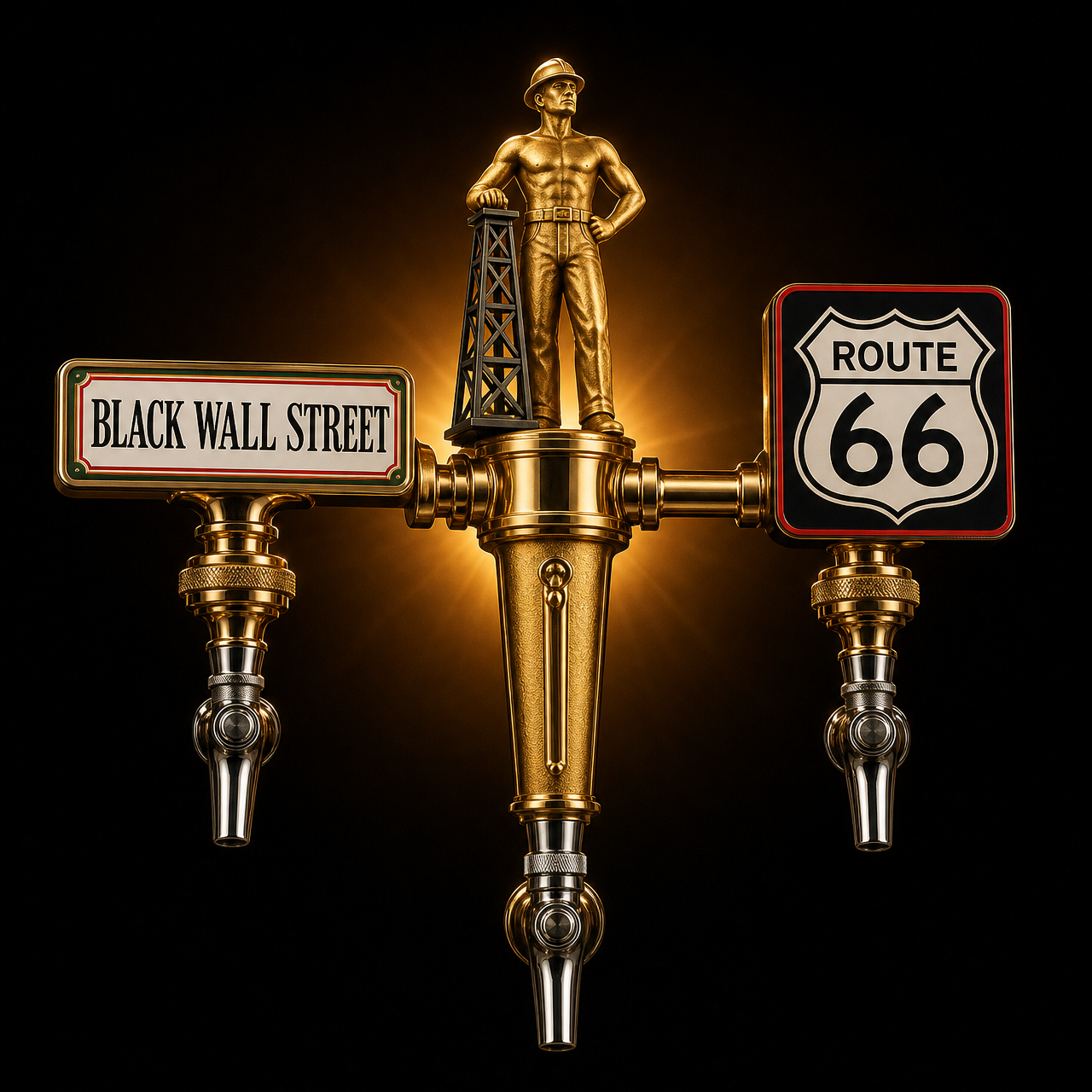
In 1906, Black entrepreneur O.W. Gurley bought 40 acres of Tulsa land north of the Frisco railroad tracks and began selling parcels only to Black buyers. Within a generation, that stretch of Greenwood Avenue became the beating heart of what Booker T. Washington called "Negro Wall Street" — later known to the world as Black Wall Street.
Because Jim Crow laws forbade Black Tulsans from shopping, banking, or seeing a doctor south of the tracks, they built everything themselves. By 1921, Greenwood held more than 300 Black-owned businesses: two newspapers, two theaters, a hospital, a public library, a savings & loan, dozens of restaurants and grocers, hotels, law offices, and medical practices. A dollar earned in Greenwood was said to circulate through Black hands 36 times before leaving the neighborhood.
Greenwood was not a shantytown — it was a modern, thriving city within a city, and one of the wealthiest Black communities in the United States.