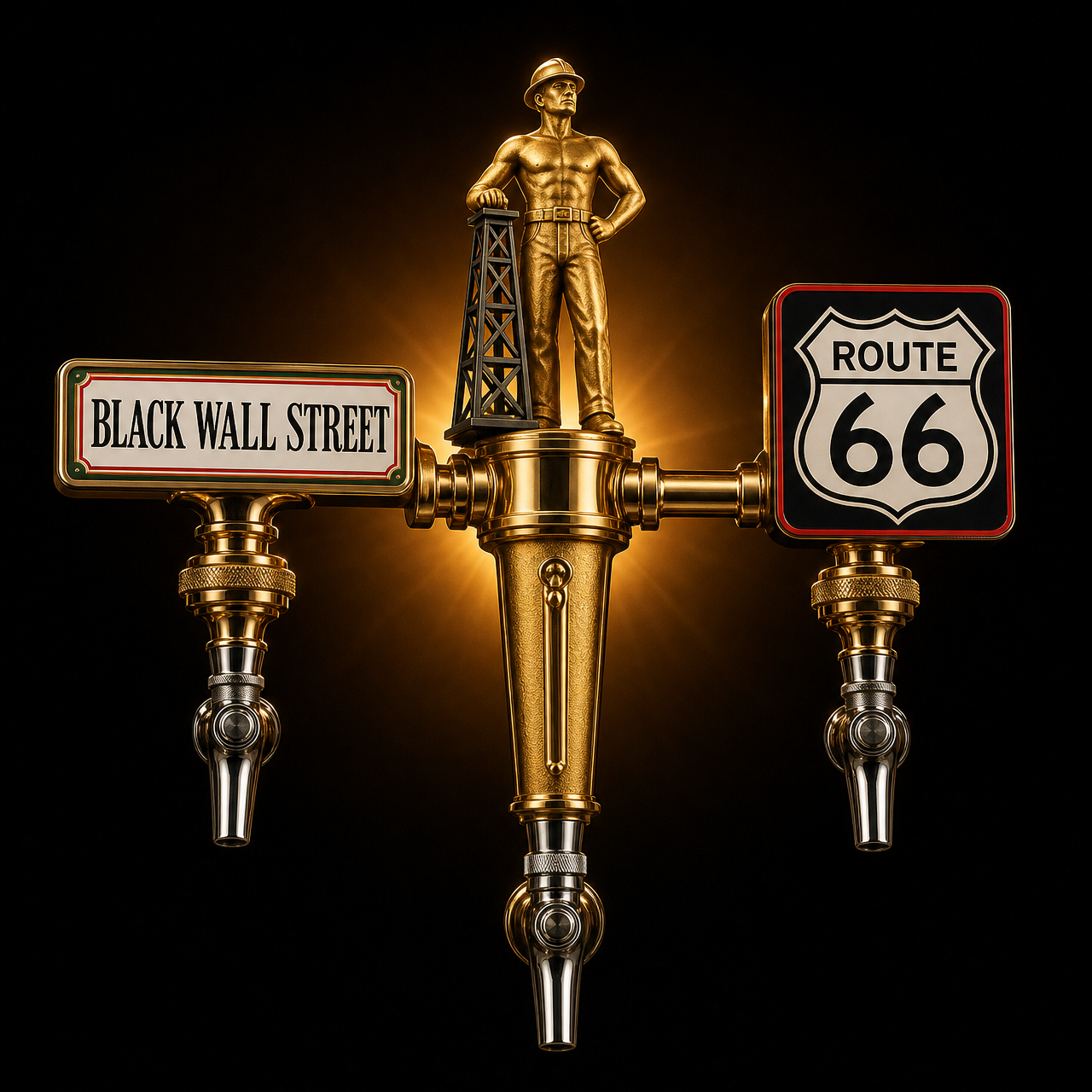
Long before it was a song lyric or a nostalgia trip, Route 66 was a Tulsa idea. In the mid-1920s, Tulsa oilman and businessman Cyrus Avery — chairman of the state highway commission and a member of the federal committee designing the new U.S. numbered highway system — insisted that America's first coast-to-coast highway should run diagonally from Chicago to Los Angeles, through Oklahoma, and directly through his hometown.
He got his way. On November 11, 1926, U.S. Highway 66 was officially commissioned — a 2,448-mile ribbon of pavement stretching from Michigan Avenue in Chicago to the Santa Monica pier. In Tulsa, it followed 11th Street through downtown, dropped south across the Arkansas River, and continued down Southwest Boulevard. Every mile in and out of the city carried travelers past Tulsa's storefronts, motor courts, and gas stations.
When John Steinbeck later called it "the Mother Road," he was describing the highway that ran through Cyrus Avery's Tulsa. That's why Tulsa is officially recognized as the Capital of Route 66 — not a stop along the way, but the birthplace of the road itself.